
Catastrophe de Bhopal
Le 3 décembre 1984 a lieu la plus grande catastrophe industrielle (à ce jour), vers minuit, à Bhopal, capitale de l’État du Madhya Pradesh. L’usine d’Union Carbide produisant le pesticide Sevin voit sa cuve contenant 40 tonnes de M.I.C. exploser, laissant s’échapper un nuage toxique vers la ville. Le gaz brûle les yeux et les poumons dans un premier temps, à l’origine de nombreuses asphyxies mortelles: on estime qu’il y a eut 8000 morts la première semaine.
La catastrophe de Bhopal est à l’origine de 2 générations de victimes:
la première génération, exposée au gaz toxique libéré cette nuit du 3 décembre 1984, et souffrant souvent d’insuffisance respiratoire, facilitant des infections secondaires (tuberculose),
une deuxième génération, surtout exposée aux pesticides abandonnés dans l’usine, lessivés par les pluies, contaminant alors les nappes phréatiques et donc l’eau potable pour toute la population aux alentours de l’usine.
Les origines de la catastrophe sont multiples:
d’emblée de très mauvais choix dans la méthode de production du pesticide Sevin, obligeant au stockage (dans des cuves) de dizaines de tonnes de produits très dangereux comme le M.I.C.,
une surestimation des ventes, et donc des contenances des cuves,
un semi-abandon de l’usine, laissée à la décrépitude, et la non surveillance/remplacement des systèmes de sécurité:
1. affolement des capteurs de pression des gaz dans les cuves: ignoré,
2. système de refroidissement des cuves: non opérationnel,
3. tour de neutralisation des gaz en cas de surpression: hors service,
4. tour pour brûler des gaz s’échappant en cas de surpression: non opérationnelle…
Plus de 30 ans après, rien n’est résolu: l’usine et les sols alentour ne sont toujours pas décontaminés, et l’eau des sols reste fortement polluée. Des personnes meurent quasiment tous les jours: on estime à 25 000 le nombre de morts depuis la catastrophe… Les Bhopalis se battent depuis plus de 30 ans pour obtenir aide et justice:
pousser Dow à mettre en place les moyens financiers nécessaires pour aider sur le long terme les victimes actuelles et futures (soins médicaux, réhabilitation, recherches médicales…), et à nettoyer à ses frais le site de l’usine,
avoir un accès à une eau potable, et en quantité suffisante,
obtenir le jugement de Warren Anderson (ancien PDG d’UC; un mandat d’arrêt à son encontre a été émis en juillet 2009).
-
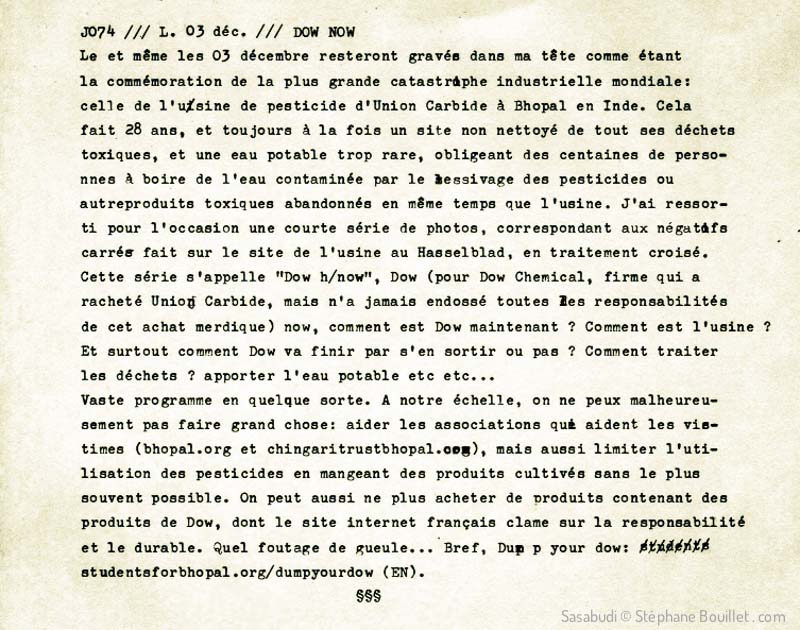
J074 /// Dow now
Le et même les 03 décembre resteront gravée dans ma tête comme étant la commémoration de la plus grande catastrophe…
-
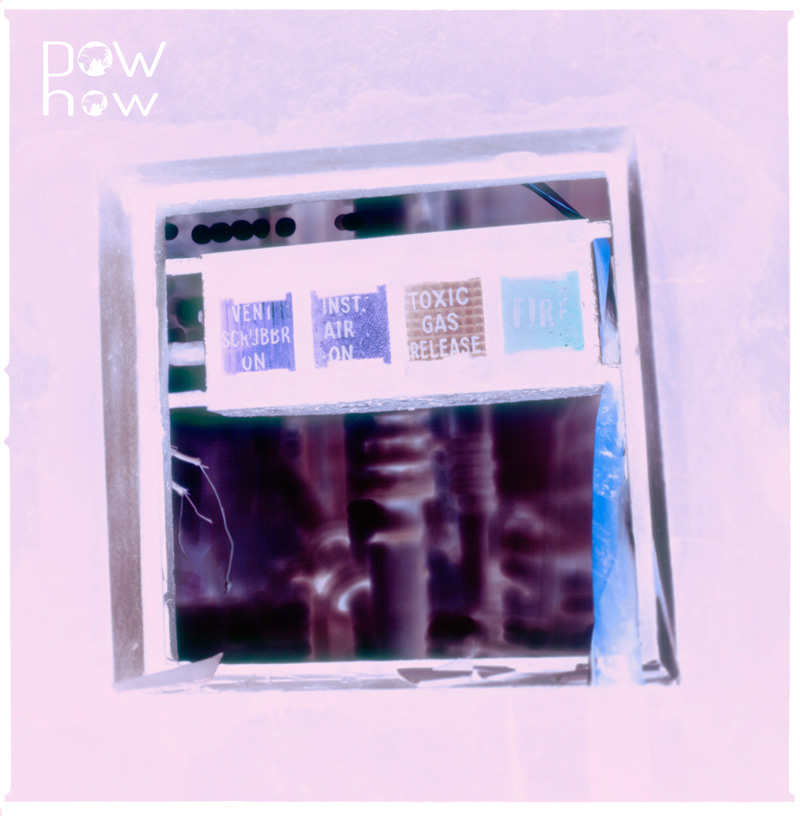
Dow now – Bhopal #7
« Bhopal: Dow now” est une courte série de photographies de l’usine Union Carbide (racheté par la firme Dow Chemical). Now…
-

J0 | Bhopal XXV livre | Bhopal XXV book
Dans ce Livre au format pdf sont concentrées les informations et les photos réparties dans le site Bhopal XXV. « SAFETY…
-
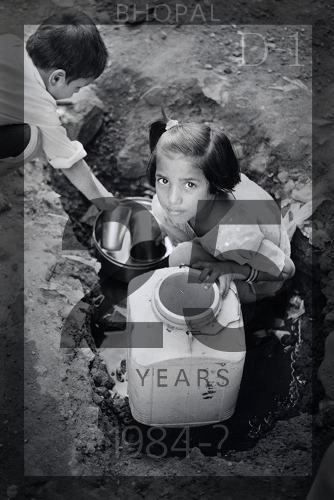
J-1 | Eau | Water
Contamination de l’eau: encore combien de victimes ?© Stéphane Bouillet › contact Contamination of water: still how much victims ?©…
-
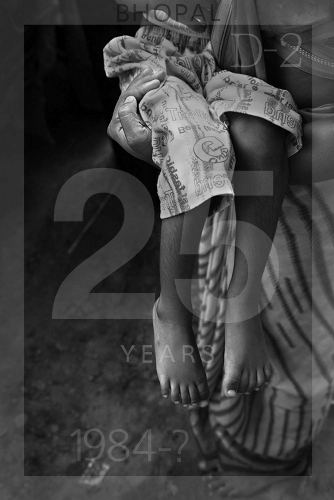
J-2 | Déficience | Deficiency
Déficience locomotrice© Kostas Pliakos Locomotor deficiency© Kostas Pliakos Les problèmes à la naissance sont multiples, et concernent aussi bien les…
-
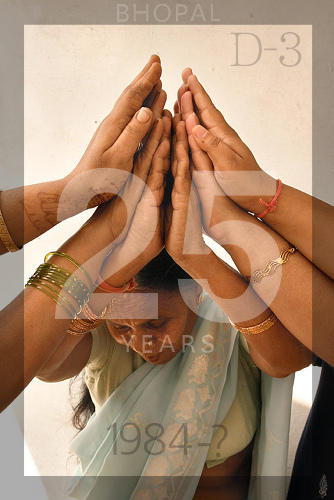
J-3 | Champa Devi
Champa Devi© Micha Patault › contact Champa Devi© Micha Patault › contact Femmes arborant le signe de la Chingari Trust.…
-
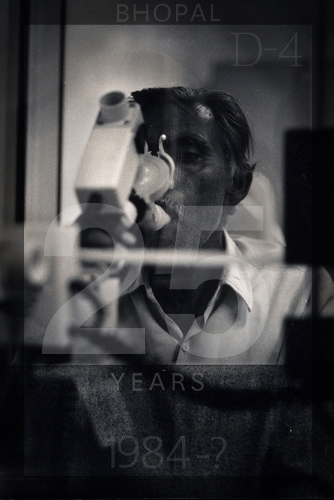
J-4 | R.K. Namdev
R.K. Namdev, 67 ans© Stéphane Bouillet › contact R.K. Namdev, 67 years old© Stéphane Bouillet › contact Test de capacité…
-
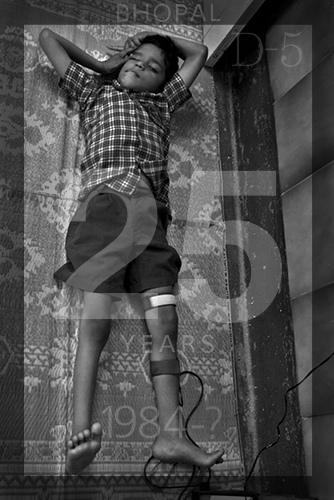
J-5 | Davab
Davab, 8 ans© Kostas Pliakos Davab, 8 years old© Kostas Pliakos Davab souffre d’incoordination locomotrice et de problèmes de transmission…
-
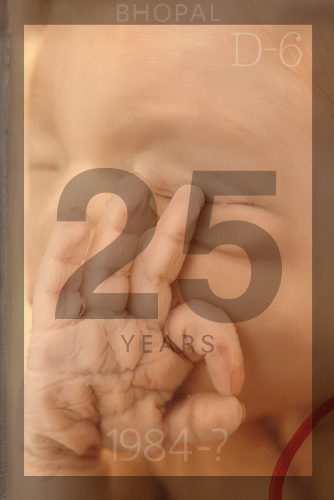
J-6 | Fœtus
Fœtus avorté en 1984© Micha Patault › contact Aborted fœtus in 1984 © Micha Patault › contact La nuit de…
-
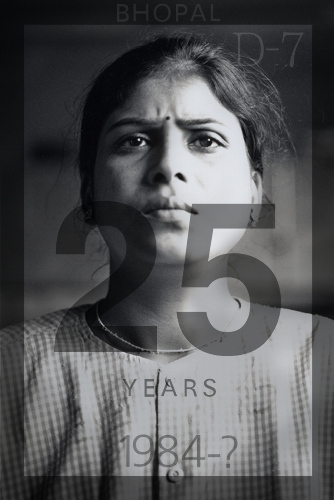
J-7 | Kiran
Kiran, 28 ans© Stéphane Bouillet › contact Kiran, 28 years old© Stéphane Bouillet › contact Après l’opération de son œil…
-
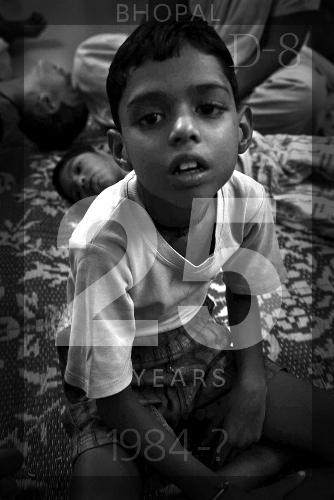
J-8 | Devas
Devas, 6 ans© Kostas Pliakos Devas, 6 years old© Kostas Pliakos Devas souffre de retard mental. Il est soutenu et…
-
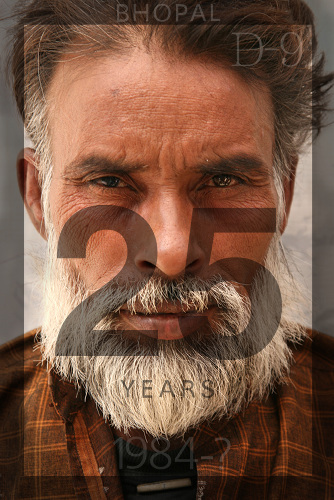
J-9 | Barkat Ali
Barkat Ali, 52 ans© Micha Patault › contact Barkat Ali, 52 years old© Micha Patault › contact Le passé de…
-
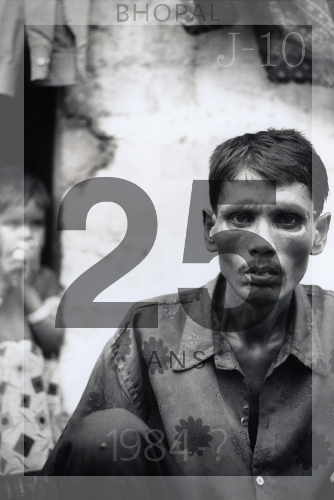
J-10 | Ramish
Ramish, 37 ans© Stéphane Bouillet › contact Ramish, 37 years old© Stéphane Bouillet › contact Depuis l’explosion de l’usine en…
-
J-11 | Sanjin
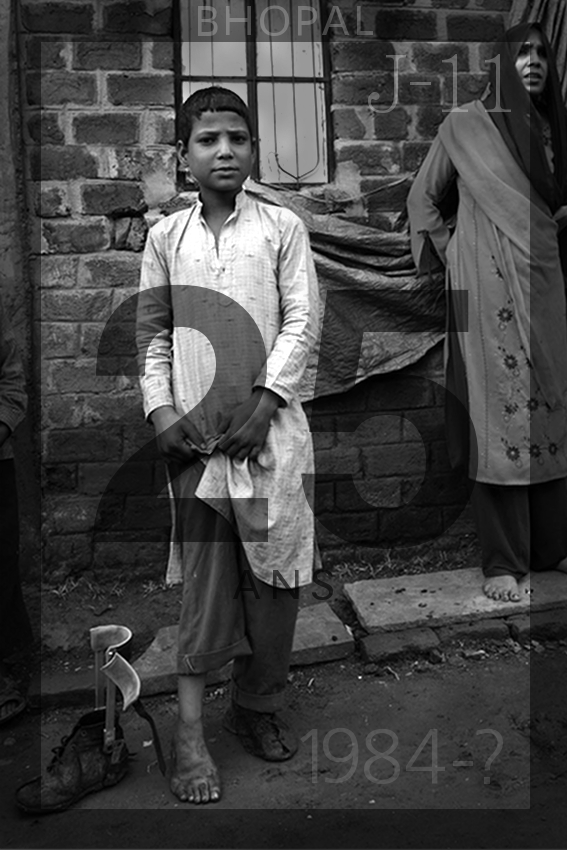
Sanjin 12 ans© Kostas Pliakos Sanjin 12 years old© Kostas Pliakos Sanjin a une déformation podale; il a déjà eu…
-
Bhopal XXV
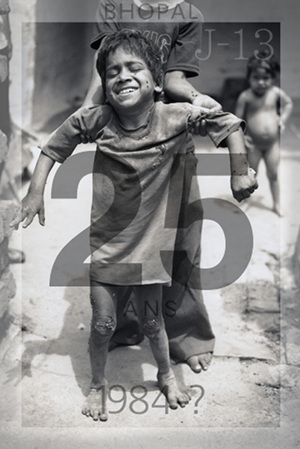
Suraj Rai, déficient moteur et mental › Voir la série Bhopal XXV© Stéphane Bouillet › contact BHOPAL XXV | 25…
-
J-12 | Gulab Bai
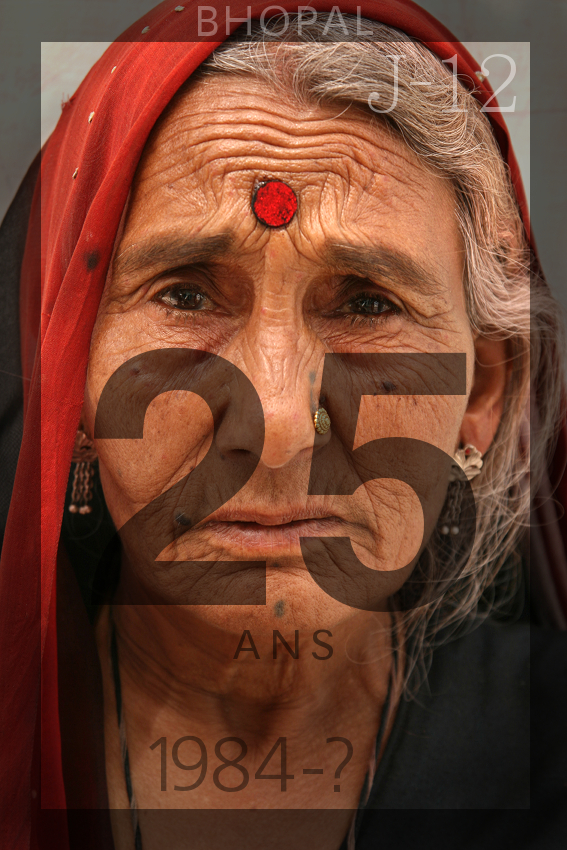
Gulab Bai, 75 ans© Micha Patault › contact Gulab Bai, 75 years old© Micha Patault › contact Gulab Bai a…